|
Firm of architectural sculptors founded by William Vickers I in Birmingham, around 1883,
and later continued by his sculptor sons William Vickers
II (1880-1922) and James Vickers (b. 1888) in Glasgow.
The firm is listed in Glasgow's POD
from 1892, at 99 Grant Street. It later operated from
premises at 221 West Regent Street, and later from 124 Cambridge Street, where it remained until
closing down in 1940. The firm became a limited company in 1926.
Born in England, William Vickers I worked as a carver and sculptor in Birmingham and
worked as a Foreman Carver on Mount Stuart, Isle of Bute, for Sir Robert Rowand Anderson and the
Marquis of Bute, alongside carvers employed by
Farmer & Brindley
and William Nicholls of London (c. 1883).
Vickers married Mary White in Birmingham on 4 October 1877, and moved to Glasgow shortly
afterwards as an architectural and monumental sculptor. He lived at 8 Shaftesbury Terrace,
224 West Regent Street, with his wife and five children.
William Vickers II was born in Glasgow in 1880, and trained with his father, and
studied at GSA
under
Kellock Brown
. He won a Haldane Bursary in 1898, and was appointed
as a teacher of design, decorative art and stone carving at the school on graduating that
same year.
He married Bryde Prenty on 26 August 1909 at St Columba’s Chapel, Glasgow, and lived at
109 Hill Street, Garnethill. He died on 29 January 1922, of Nephritis and Cardiac Syncope,
and was survived by his wife and son, William Joseph Vickers, who
was born on 25 June 1910, at 12 Montague Street, Hillhead, Glasgow.
The firm specialized in ecclesiastical work. They produced statues for St Margaret's Convent of
the Ursulines of Jesus, Whitehouse Loan, Grange, Edinburgh (1893); work for
J J Burnet
's
restoration of Arbroath Old Church (1896); the marble and alabaster work on the
reredos in St Ninian's Episcopal Church, Pollokshields, Glasgow (1899) and the statues,
lettering and symbols of the Agnus Dei and the
Evangelists on the reredos in
J J Burnet
's Barony Church, Castle Street (1900).
Their most important ecclesiastical commission was for the High Altar and carver work in
St Aloysius Church, Rose Street (1908-10).
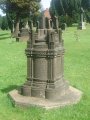
They also executed the Priests of St Peter's Seminary Monument at St Peter's Cemetery,
Glasgow, to a Gothic design by the Dioscesan
architect, Peter Paul Pugin (c. 1894).
They also produced sculpture for many of Glasgow's commercial and domestic buildings. However,
many examples of their work have been lost through demolition, whilst other examples remain unidentified
due to the loss of the firm's records.
One surviving project in which the firm was involved was the construction of Kelvingrove
Art Gallery and Museum in the late 1890s, where Vickers' team of carvers worked under
the supervision of
Sir George Frampton
on the decorative carving on the building's east and
west facades from his models.
Prior to commencing this work, the elder Vickers, together with the four other Glasgow
sculptors chosen to decorate the building (
James Young
,
William Shirreffs
,
Archibald Macfarlane Shannan
and
J M Sherriff
) were taken on a tour of Paris by Frampton, to gauge the quality of work he required at Kelvingrove.
Other identified examples of Vickers' work in Glasgow are:
The shell tympana and capitals on Copland & Lye's Bath Street extension (1896, dem. 1973);
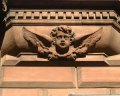
the Cherubs and Amorini on Royal Bank Chambers,
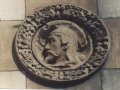
140-2 St Vincent Street (1899-1900); the Renaissance portrait medallions on 10 Lowther Terrace
(1900, now Baxter House); the inscription Three Ell Corner on a tenement on Govan Road
(1900, dem.); the now decaying carver work around the dome of the McLellan Galleries,
Sauchiehall Street (1903); and the grand staircase in the Mitchell Library (1907-11).
As well as working on these projects, the younger William Vickers modelled the figures on
the Roseberry Mace of the City of Glasgow and the Mace of University College,
Dundee (both c. 1912).
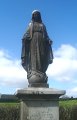
The firm's cemetery work includes several figurative monuments in St Peter's Cemetery in
Glasgow. Amongst them are the monuments to Margaret Hughes, with a marble statue of the
Virgin Mary standing on a globe of the world and a serpent (1914); the monument to
John C. MacDonald, which includes a crucifix (1915); and others in the form of the
Virgin Mary standing in a rough-hewn niche.
One of Vickers' apprentices was the sculptor Loris Rey (1903-63), who was employed on the firm's
production of cemetery monuments for 30 shillings a week, and who ran the firm for nine month's
after William Vickers II died in 1922, on behalf of his widow.
The team at glasgowsculpture.com is grateful to Michael Vickers, great grandson of the
founder of William Vickers Ltd for information
about his family.
Sources:
- POD
1890-1940
- Census Returns, 1891, 644.9, Book 57, p. 24
- Census Returns, 1901, 644.9, Book 42, p. 14
- GSA
Annual Reports 1898-1913
-
McKenzie (1999)
- Nisbet, in
McKenzie (2002)
- E-mail from Andrew McLean, 11 June 2003, re: Mount Stuart
- E-mail from Mathew Whithey, 19 August, 2003, re: Loris Rey
- E-mail from Clare Greenall, 20 March, 2006, re: Loris Rey
- E-mails from Michael Vickers, 17 December 2006 - 12 December 2007, re: Vickers' family
- The Govan Press, A Prospect And A Contrast, 30th November, 1900, p. 5 (ill.)
|