 |
|
| Newsletter No.3 | 29 March, 2002 |
|
Welcome to our March Newsletter:
|
|
This month's Newsletter has been a little delayed for two good reasons. The first was for last week's launch of Public Sculpture of Glasgow and the second was for the unveiling last week of The Gatekeeper.
| There's a bumper crop of new galleries this month not to mention seven new biographies, including one for the architect Piers Gough, who performed the unveiling ceremony for The Gatekeeper. Keep checking the website for the latest additions.
Thanks again for visiting us and do send us an email if you would like to comment on our website or if you have anything to add to our research. And please don't forget to let all your friends know. See you on the website! Tim Gardner
| top |
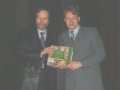 Here is a picture of Ray McKenzie (left) and Gary Nisbet (right) holding a copy of their new book, which is hailed as the definitive guide to public sculpture in Glasgow and is certainly the most important work of its kind in recent years and will remain so for many years to come. Naturally, we've also made it Book of the Month.
|
New photo galleries during March:
|
 Kenny Hunter Works in Glasgow (1991-2001).
 This is a small gallery containing several images of two of his works in Glasgow: Citizen Firefighter and The Calf. Locations: Gordon Street and Graham Square.
| top |
 Highland Light Infantry Memorial (1906).
Dedicated to the officers, non-commissioned officers and men of Glasgow's Highland Light Infantry who died during the Boer War (1899-1902). Location: Kelvingrove Park.
| top |
 Cameronians (Scottish Rifles) War Memorial (1924).
This powerful piece of sculpture is located in Kelvingrove Park, just west of Glasgow Museum and Art Gallery. The sculptor was Philip Lindsey Clark (1889-1977). | top |
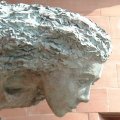 The Gatekeeper (2002).
Part of the Crown Street Regeneration Project. Location: Malta Terrace/Caledonia Road, Gorbals.
| top |
 The Attendants (2002).
Part of the Crown Street Regeneration Project. Location: Malta Terrace and Caledonia Road, Gorbals.
| top |
|
New biographies during March:
|
| Henry Poole (1873-1928). A London sculptor, he served an apprenticeship with Harry Bates and later executed a copy of Bates' Lord Roberts Monument, Calcutta (1894-8), for Glasgow, erected in Kelvingrove Park, 1916. | top |
| Alexander MacDonald & Co. (fl. c.1848 - c.1908). Firm of monumental sculptors and granite quarriers. They produced a number of monuments for Glasgow's Necropolis to their own design or architects' and collaborated with other important sculptors. | top |
| David Buchanan (fl.1878-1920). Mini-biography of this monumental sculptor. | top |
| Colin Menzies (fl. c.1894 - c.1910). Glasgow based architect, he was in partnership with David Thomson at the turn of the 19th Century. | top |
| Colonel Sir Robert William Edis (1839-1927). The architect of Glasgow's Conservative Club (1893-4, dem. c. 1973), he was based in London and was Colonel of the Artists Corps of Volunteers. | top |
| Edwin Alfred Rickards (1872-1920). Born in Chelsea, London, he was apprenticed to architect J Lovell. A frequent designer of public monuments he collaborated with Harry Bates on the Lord Roberts Monument, Calcutta (1894-8) and, after visiting Vienna, published The Art of the Monument. | top |
| Piers Gough (b. 1946). Born in Brighton, he trained at the Architectural Association, London, 1965-71. Gough's most important commission in Scotland is Masterplan of Crown Street, Gorbals, Glasgow. 'One of the most widely admired social regeneration schemes in recent times'. | top |
|
Recommend us to a friend:
|
| Please forward this newsletter on to any of your friends or colleagues who you feel may be even remotely interested in Glasgow or Sculpture. Even if they aren't now, I'm sure they soon will be. | top |
|
Glasgow News:
|
|
The big news this month is the publication of Public Sculpture in Glasgow by Ray McKenzie with contributions by Gary Nisbet. The launch was held in the City Chambers, some of the guests visiting Glasgow for the first time. The Lord Provost was represented by Baillie Catherine Lyon. It also gave us the opportunity to meet the Public Monuments and Sculpture Association and the Liverpool University Press, who are rightly proud of the fine quality of their latest work.
The other happening was the unveiling by the architect Piers Gough, (who is responsible for the Masterplan of Crown Street, Gorbals), of the latest public art to be added to the Crown Street Regeneration Project, The Gatekeeper, the largest artwork in the city. David Mach has a new exhibition, Hell Bent, at the Gallery of Modern Art, until 29 September. The show has a fibreglass fire-eater, a grizzly bear, garden gnomes and heads sculpted from matchsticks. You will also find a spaceman and a nude woman built from coat-hangers. Read the full story in The Sunday Herald online. Helen Denerley may soon find her sculptures starring in a new film, A Flight Of Fancy. The lead actress plays a sculptor and the work she 'produces' in the film will be that of Helen Denerley. Read more about this exciting prospect in The Sunday Herald online. | top |
|
Inside Story:
The Gatekeeper (2002).
One of the most significant events in the long history of Glasgow's public and architectural sculpture, The Gatekeeper marks the latest achievement of the Crown Street Regeneration Project, which has transformed the desert of the demolished Gorbals into Britain's most important urban regeneration scheme. A collaboration between Heisenberg and Gerry Henaughen, of Hypostyle architects, and commissioned by Redrow Homes (Scotland) Ltd. The installation comprises a 5.2 metre x 3.9 metre glass-encased photographic image in a steel frame five metres above ground. Suspended above it on an anchor chain is a twice-lifesize figure, the only suspended sculpture in the UK. Beneath the group is a crypt containing burned remains of objects donated by members of the community. The Gatekeeper was inspired by the story of Lady Lachow, who in the 12th Century founded St Ninians Hospital on the site of the artwork, and the area's historic role as a gateway for immigrants to the city. Author: Gary Nisbet | top |
 The largest public art work in Glasgow, The Gatekeeper was unveiled by Piers Gough on 27 March 2002.
|
Book Choice:
|
|
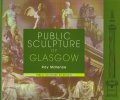
Public Sculpture of Glasgow.
The study of architectural sculpture, falling between the history of art and the history of architecture, has been until very recently generally neglected – even by that great pioneer, Rupert Gunnis. Ray McKenzie has in this volume for the first time demonstrated the importance of Glasgow’s architectural sculpture and explained its function with a wealth of superbly arranged and carefully marshalled detail. Published by Liverpool University Press.
Buy this book from...
Hard-back: Paper-back: | top |
 In this fifth volume of Public Sculpture of Britain, most of the
greatest British and some continental sculptors are represented with
important sculptures – John Flaxman, J H Foley, John Gibson, Francis Chantrey,
Carlo Marochetti, Auguste Nicolas Cain, Hamo Thornycroft, George Frampton and
many others. Glasgow was never provincial has always resisted artistic
centralization based on London. Elsewhere public sculpture has largely
represented provincial excursions by London sculptors. Edinburgh of course
had its own sculptors, some of whom worked in Glasgow, but it lacked both
Glasgow’s wealth and international links. Liverpool had eminent sculptors
but they lived mainly in Rome. Only in Glasgow, and perhaps also in Edinburgh,
were there significant local workshops, often family based, training dynasties
of native sculptors. These workshops themselves depended on another great
Glasgow specialism, architectural sculpture. Local architects naturally
looked to local sculptors for the sculpture intended to enhance the beauty,
proclaim the importance and explain the purpose of their buildings.
In this fifth volume of Public Sculpture of Britain, most of the
greatest British and some continental sculptors are represented with
important sculptures – John Flaxman, J H Foley, John Gibson, Francis Chantrey,
Carlo Marochetti, Auguste Nicolas Cain, Hamo Thornycroft, George Frampton and
many others. Glasgow was never provincial has always resisted artistic
centralization based on London. Elsewhere public sculpture has largely
represented provincial excursions by London sculptors. Edinburgh of course
had its own sculptors, some of whom worked in Glasgow, but it lacked both
Glasgow’s wealth and international links. Liverpool had eminent sculptors
but they lived mainly in Rome. Only in Glasgow, and perhaps also in Edinburgh,
were there significant local workshops, often family based, training dynasties
of native sculptors. These workshops themselves depended on another great
Glasgow specialism, architectural sculpture. Local architects naturally
looked to local sculptors for the sculpture intended to enhance the beauty,
proclaim the importance and explain the purpose of their buildings.


|
Don't forget to use the [F11] key:
|
|
When browsing our website you may find that you need more room to view the photo-galleries. That is where the [F11] key comes in. Press this key and you will get a full screen with just a narrow tool-bar at the top. If you liked that then right-click on the narrow tool-bar and select Auto-Hide. This will hide the tool-bar itself whenever you are not using it. Just slide the mouse-pointer towards the top of the screen and it will appear again.
Unfortunately, this only works for MS Internet Explorer browsers. | top |
|
Unsubscribe or change email address.
Also for friends to confirm their subscription:
|
|
If you are one of the lucky ones that have been sent a complimentary copy of this Newsletter from one of your friends, please send a blank email to confirm and your subscription will be continued (just click on the underlined email address). No need to type anything. We will get your email address automatically.
If you wish to change the email address we send your Newsletter to, then please send an email to changeaddress, not forgetting to put your new address in the message field (just click on the underlined email address). If you would like to cancel your subscription completely, please send a blank email to cancel (just click on the underlined email address). In any case please be assured that we never pass on email addresses to any third party for any reason whatsoever. If you cancel an email address with us, then that address will be permanently removed from all our files. | top |
|
Contact us.
|
|
Email for general enquiries and information.
Email Tim Gardner, the editor and webmaster. Email Gary Nisbet, the historian. | top |
| Copyright 2002 scot-it.com | top |